Breaking Location Silos to Enable Nationwide Expansion
Borrowed & Blue's data model locked vendors to single cities. A Boulder photographer couldn't appear in Denver searches despite being 20 minutes away. This created duplicate profiles, frustrated vendors, and blocked the platform from expanding to new markets.
I worked with our lead engineer to rearchitect the location model from static city silos to flexible, geocoded vendor profiles with hierarchical location pages for SEO.
Nationwide vendor discovery with vendors visible across all cities they serve
Hundreds of new SEO landing pages at state, city, and neighborhood levels
Fewer location support tickets as vendor complaints about geographic limits dropped significantly
Problems
The old system created three major issues:
Artificial Geographic Constraints
Vendors could only list in one city, even if they served multiple nearby areas. A Boulder vendor willing to work Denver weddings was invisible to Denver couples.
Frustrated Users
Vendors complained about missing opportunities. Couples searching in smaller cities saw limited results, even when great vendors existed in nearby metros.
Boulder
Golden
Denver
Same photographer, three separate profiles: different reviews, different photos, fragmented SEO equity.
Approach
I worked closely with our lead engineer to rethink the location data model from the ground up. After speaking with vendors, it became clear that their preference was primarily to show up as much as possible, while couples tended to think in geographic constraints.
We ended up with a bit of a hybrid approach, reverse geocoding all existing vendors and developing a sorting algorithm for new, more flexible location pages. I also added a way for vendors to add additional 'travel' locations, as some, like photographers, often have more disparate geographies they're willing to work in.
Solution
We migrated all existing vendors automatically based on their existing primary address to avoid manual work.
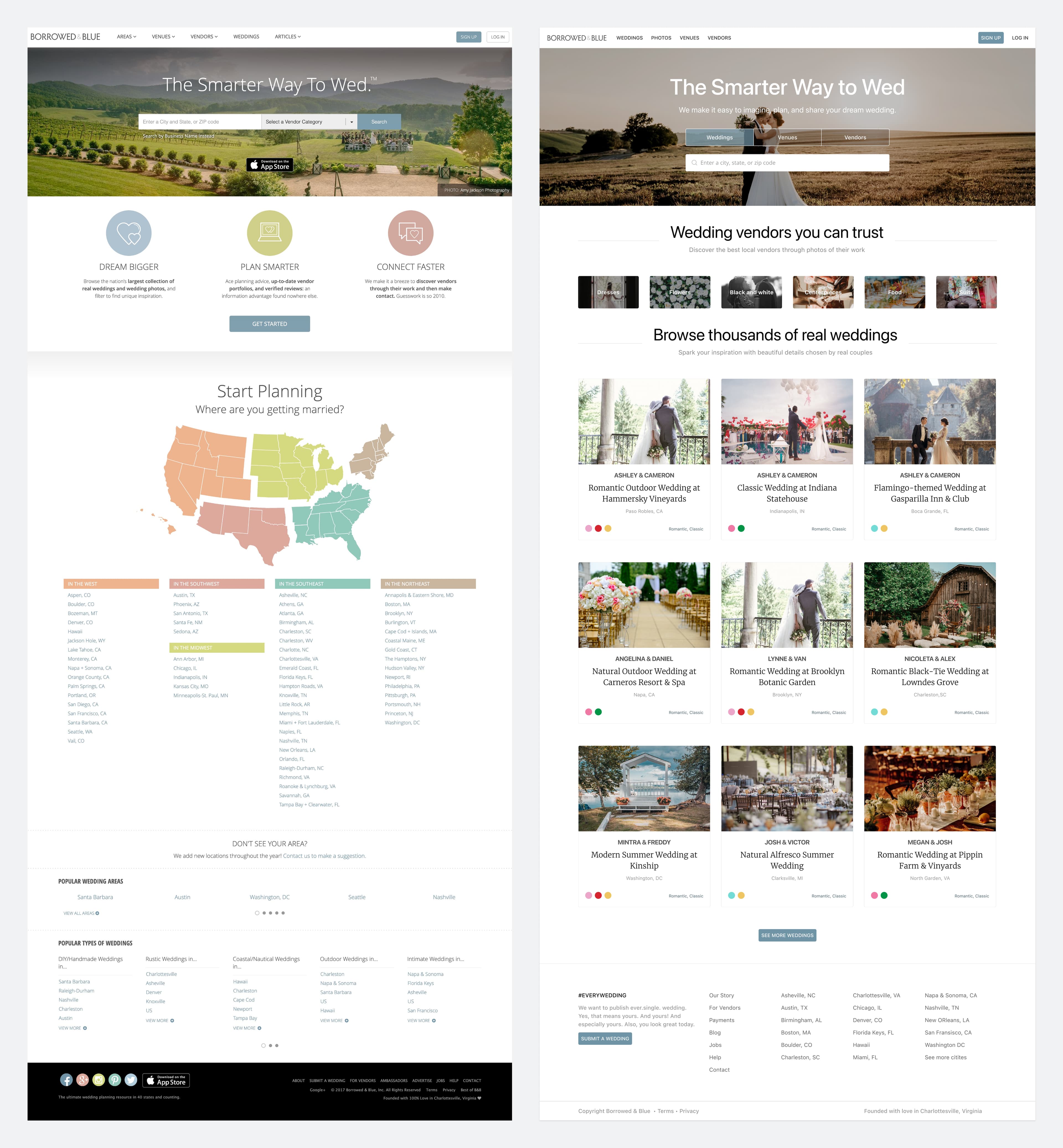
The homepage was redesigned to featured a prominent search by location or venue. They could search by state, city, or zip, and then filter results by distance from their venue.
We spun up hundreds of new location landing pages with unique content for each level. "Colorado Wedding Photographers" linked to "Denver Wedding Photographers" which linked to more specific pages. It ended up enabling a true 'nationwide' launch of Borrowed & Blue, and accelerated our vendor adoption.
Impacts
Vendor Satisfaction
Vendors praised the new experience, reporting more inquiries from couples in neighboring cities. Support tickets about location issues dropped significantly.
User Testing
Post-launch testing showed couples executed searches with far less confusion. Bounce rates on search results pages decreased as more relevant vendors appeared.
Nationwide Expansion
The new architecture enabled us to expand to new markets more efficiently. Smaller cities benefited from nearby metro vendors, bootstrapping marketplaces faster.
SEO Performance
Hierarchical pages began ranking for broader terms. Organic traffic to location pages increased as we captured searches for entire states and regions, not just specific cities.
Reflections
This was largely an issue brought on by early architecture decisions. The siloed approach had been ok for a slow, regional-based rollout, but had to be completely rewritten to keep growing.
The most challenging part was balancing flexibility (vendors wanted unlimited service areas) with usability (couples needed relevant, nearby results). We iterated on radius defaults and default sorts to find the right balance.