iOS App Redesign: 3.5 to 4.8 Stars
How I led a complete mobile app redesign grounded in user research, addressing navigation confusion and adding offline functionality to improve app store ratings
Despite being featured in "Apps We Love," reviews showed users loved our content but couldn't find saved trips, needed offline access for hiking, and experienced frequent crashes. I analyzed App Store reviews, conducted user interviews and usability tests, then redesigned the information architecture and partnered with engineering on a React Native rebuild.
The redesign improved app store ratings from 3.5 to 4.8 stars within six months. The app was featured again in the App Store's "Apps We Love" section, and 40% of users adopted the new offline features within three months.
The Problem
Great Content, Poor Experience
App Store reviews revealed a consistent pattern: users loved our content but couldn't find saved trips, needed offline access for hiking without cell service, and experienced frequent crashes. The hybrid codebase was too fragile to iterate on, and navigation patterns didn't match iOS conventions or user expectations.
Confusing information architecture made it hard to find saved trips or follow other adventurers
No offline functionality—hikers couldn't reference trip details on trail without cell service
Missing GPX track support forced users to download files and open them in third-party mapping apps
Technical debt in the hybrid codebase created performance issues and frequent crashes
User Research and Architectural Decisions
I started by analyzing App Store reviews for patterns, conducting interviews with power users and people who'd abandoned the app, and running moderated usability tests. I recruited participants through our email list and asked them to complete common tasks (find a saved trip, follow someone, plan a hike) while thinking aloud. Patterns emerged quickly: navigation was the biggest pain point, followed closely by the lack of offline functionality.
Based on this research, I restructured the information architecture around user mental models rather than technical constraints. Working with engineering, we decided a React Native rebuild was necessary—the hybrid codebase was too fragile to iterate on, and a shared codebase would let me contribute to component development directly.
Three-Tab Navigation Structure
The redesigned app launched in phases over six months. The new navigation made core features immediately accessible: Discover for browsing trips, Saved for bookmarked trips and downloads, and Profile for your activity and settings. Hidden menus disappeared, replaced by a clear, predictable hierarchy that matched iOS conventions.
Offline Download Manager
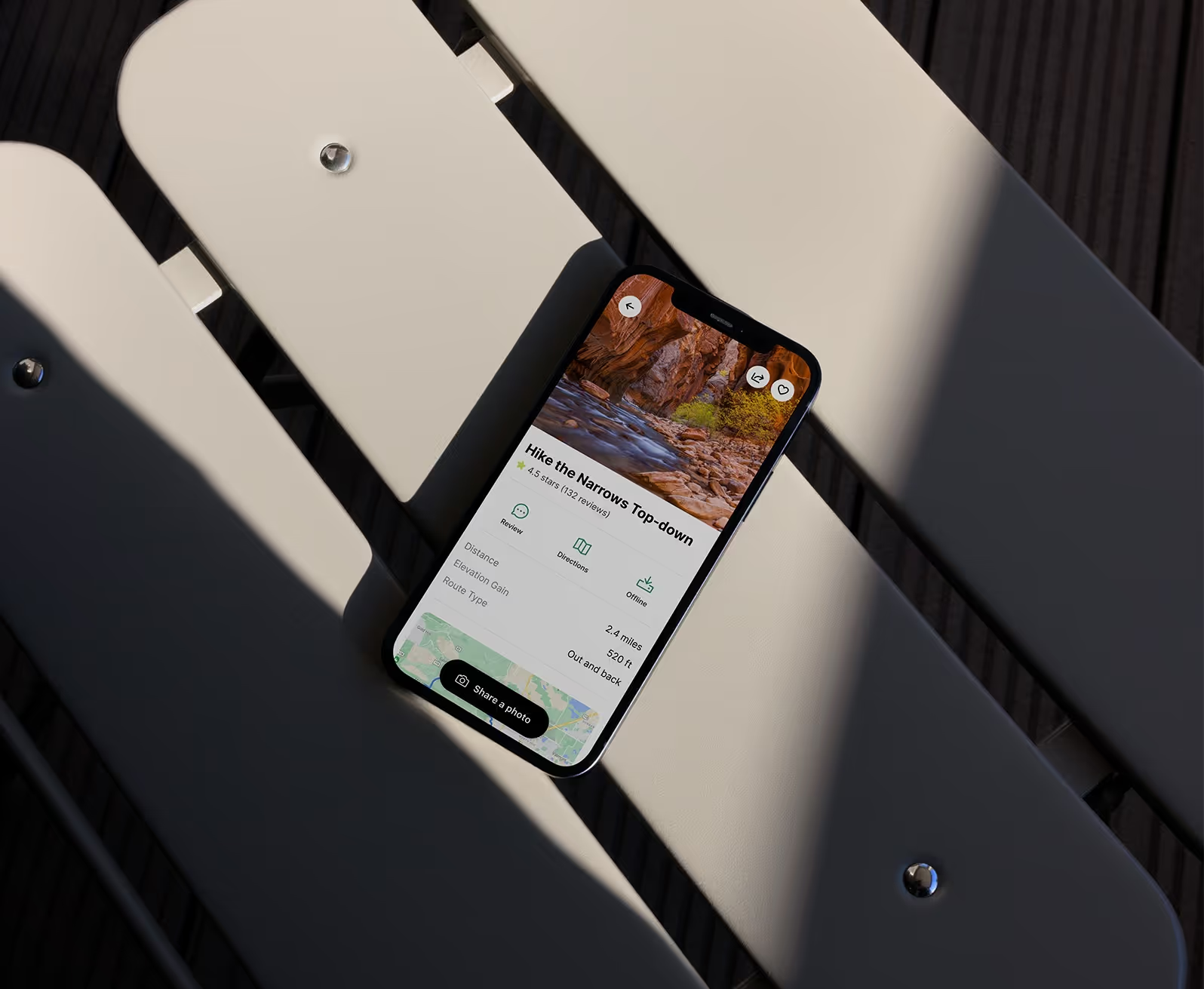
The download manager let users save trips for offline access with a single tap. Clear storage management showed how much space downloads were using, and automatic updates when back online kept content fresh without manual intervention. This became one of the most-loved features according to user surveys.
Interactive GPX Track Maps
Interactive maps rendered GPX tracks on topographic maps with elevation profiles. Users could scrub along the route to see elevation changes at different points. I integrated with Apple Maps for turn-by-turn navigation to trailheads, so users could go from reading a trip report to driving there without switching apps.
Performance Improvements
The React Native rewrite made the app noticeably faster. Lazy loading, image optimization, and better caching reduced load times by 60%. The crash rate dropped below 0.1%. Combined with the better navigation and new features, it turned an app people complained about in reviews into one they recommended.
Reflections
User research drove every major decision here. We had assumptions about what was broken, but user testing revealed different priorities, particularly around information architecture.
The React Native migration was ambitious but necessary. It let me contribute code directly to components and interactions, which accelerated iteration cycles. The shared codebase also meant design system changes propagated across web and mobile.
If I could do it again, I'd involve power users earlier as beta testers. We caught most issues before launch, but a few edge cases (like handling very large GPX files) could have been identified sooner with real-world testing.